
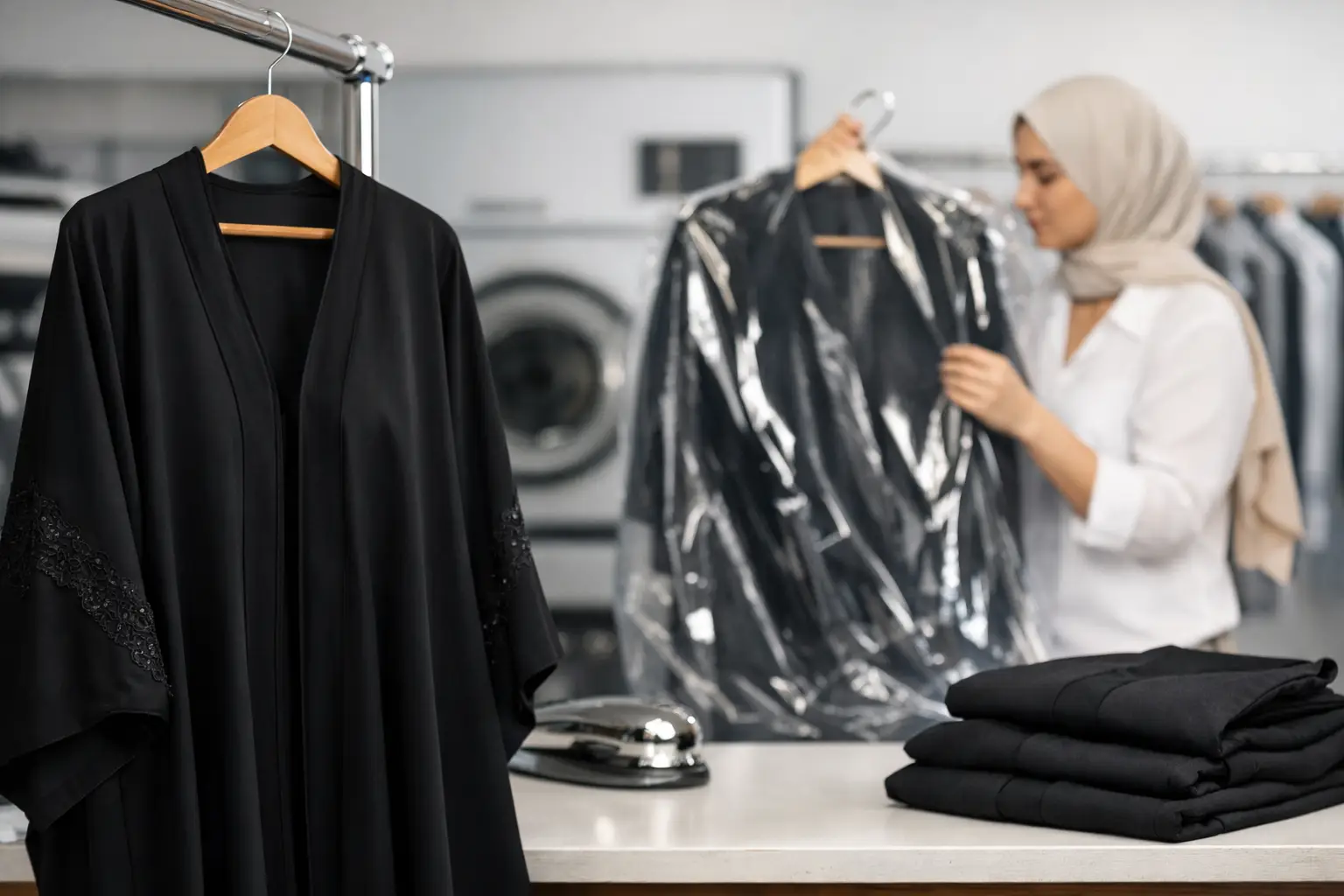
A black abaya can look immaculate one day and tired the next if it is cleaned the wrong way. The fabric may still seem fine at first, but shine marks, color fading, bead damage, and weakened seams often show up after repeated home washing. That is why knowing how to dry clean abayas properly matters, especially when the piece is made from delicate fabric or detailed with embroidery, stones, pleats, or lace.
For many abayas, dry cleaning is not about luxury. It is about control. A professional process helps protect drape, preserve embellishments, and remove odor, oils, and city dust without the agitation that can distort the garment. Still, not every abaya automatically needs dry cleaning every time. The right choice depends on fabric, construction, wear frequency, and the type of stain involved.
How to Dry Clean Abayas Without Damaging Them
The first step is reading the care label, even if you have worn the abaya for years. Labels usually tell you whether the garment is dry clean only, hand wash safe, or suitable for very gentle machine care. If the label says dry clean only, that should be treated as a clear instruction, not a suggestion.
Fabric type makes a major difference. Nidha, crepe, chiffon, silk blends, satin-finish materials, and abayas with structured tailoring often respond better to dry cleaning than regular washing. Embellished occasion abayas also need extra caution because moisture, friction, and heat can loosen glue-set details or warp delicate trims.
Inspect the Abaya Before Cleaning
Before sending the abaya for cleaning, inspect it under good light. Look for makeup around the collar, perfume buildup, oil spots near the cuffs, and dust along the hem. This helps identify areas that need focused treatment.
Different stains require different cleaning chemistry. A general wash cycle may not fully remove body oils, while harsh spot rubbing can leave visible marks on dark fabric.
Professional Assessment Matters
A quality dry cleaning process starts with garment assessment. The cleaner should sort by fabric type, color stability, embellishment level, and cleaning method. This is where premium care stands apart from volume-based processing.
Abayas should not be treated like standard everyday laundry.
Proper Stain Pre-Treatment
Pre-treatment is the next critical stage. Stains are addressed carefully before the main cleaning cycle, using solutions suited to the fabric and the nature of the mark.
An aggressive stain treatment may remove the spot but leave behind fading, ring marks, or damage to decorative elements.
The Dry Cleaning Process
The actual cleaning stage uses solvent-based or fabric-safe specialty processes designed to lift oils and embedded soil with less mechanical stress than ordinary washing.
For abayas with trims, pleats, delicate sleeves, or layered panels, that reduced agitation is often what protects the garment’s silhouette.
Finishing and Pressing
After cleaning, finishing matters just as much. A well-cleaned abaya can still look poor if it is pressed incorrectly.
Excess heat can create shine on dark fabrics, flatten texture, or weaken adhesive embellishments. Proper finishing restores a smooth, elegant fall without making the fabric look stiff or overworked.
When Dry Cleaning Is the Better Choice
There are times when dry cleaning is clearly the safer option. If the abaya is formal, heavily embellished, dark and prone to fading, or made from fabric that wrinkles or shrinks easily, professional care is usually worth it.
The same applies if the garment has mixed materials, such as chiffon sleeves with a crepe body, or lace panels attached to a heavier base fabric.
Special Occasion Abayas Need Extra Care
Occasion wear deserves even more caution. Bridal abayas, Eid pieces, and garments worn for events often carry invisible stress from perfume, body oils, and outdoor dust.
They may not look heavily soiled, but storing them without proper cleaning can lead to set-in odors, discoloration around the neckline, and gradual fabric dullness.
Everyday Abayas and Cleaning Frequency
A simple, everyday abaya made from durable, wash-safe fabric may not need dry cleaning after every wear. Some can be freshened between wears and cleaned less aggressively.
However, repeated home washing, even on gentle settings, usually shortens the lifespan of black dyes and fine fabric finishes faster than careful professional treatment.
Common Mistakes People Make With Abaya Care
One of the most common mistakes is assuming that cold water alone makes home washing safe. Temperature helps, but it is only one variable. Friction, spin speed, detergent strength, and drying method can be just as damaging.
Using Harsh Stain Removal Methods
Makeup removers, bleach-based products, dish soap, and online stain hacks often do more harm than good on abayas.
Dark fabrics are particularly unforgiving. A rubbed area can become shinier than the rest of the garment, and that mark is often harder to fix than the original stain.
Improper Drying Techniques
Hanging a wet abaya incorrectly can stretch the shoulders, distort sleeves, and pull on decorative details.
Direct sun exposure may also fade black or deep-toned abayas over time, especially in bright climates.
Poor Storage Habits
If an abaya is put away without proper cleaning, perfume residue and skin oils continue to oxidize.
That can leave yellowing inside the collar or underarm area, even if the outer garment still looks clean.
What to Expect From a Professional Abaya Dry Cleaning Service
A professional service should feel methodical from start to finish.
That begins with garment tagging and inspection, followed by sorting into dedicated cycles based on color, fabric sensitivity, and treatment needs.
For premium garments, this discipline is essential because cross-processing increases risk.
Fabric Safe Cleaning and Finishing
You should also expect fabric-safe spotting, controlled cleaning chemistry, and finishing that respects the garment’s original design.
For abayas, pressing is not just about removing wrinkles. It is about preserving flow, sleeve shape, front alignment, and the overall polished look.
Protective Packaging
Packaging matters more than many people realize. Once cleaned, an abaya should be returned in a way that protects it from dust, creasing, and transfer from other garments.
Clean presentation signals process control, not just aesthetics.
Convenience and Garment Protection
For customers who rely on regular wardrobe rotation, convenience also becomes part of quality.
Pickup and delivery save time while reducing the chance of garments being folded into car trunks, left waiting, or handled carelessly between home and the cleaner.
How Often Should Abayas Be Dry Cleaned?
It depends on use.
An abaya worn briefly over clean clothing in an indoor setting can usually go several wears before cleaning, provided it is aired properly.
An abaya worn outdoors, during long workdays, while commuting, or around food and fragrance should be cleaned more often.
Everyday Wear
For everyday use, many people benefit from periodic professional cleaning rather than waiting until the garment looks visibly dirty.
Oils, dust, and odor build up gradually and affect fabric feel and finish long before obvious stains appear.
Occasion Wear
Occasion abayas should ideally be cleaned soon after wear, even if they seem spotless.
Delaying cleaning can make invisible residue harder to remove and increase the chance of long-term damage during storage.
Choosing the Right Cleaner for Delicate Abayas
If you are deciding where to send your garments, look beyond price and turnaround time.
Ask whether the cleaner handles delicate items separately, whether stain treatment is fabric-specific, and whether pressing is adjusted for dark and embellished garments.
Those details reveal how seriously the service takes garment care.
Questions to Ask Before Choosing a Cleaner
It is reasonable to ask about machinery, cleaning solutions, and quality control procedures.
Certified systems and disciplined workflows reduce risk, especially for premium abayas that need more than routine laundering.
A service such as Wet & Dry Laundry appeals to customers because convenience is valuable, but confidence in fabric-safe handling is what keeps garments looking refined over time.
Final Thoughts
The best results come from treating abayas as tailored fashion pieces, not just garments to be cleaned.
When care is precise, the color stays richer, the fall remains elegant, and the garment keeps the polished finish that made you choose it in the first place.
A well-maintained abaya does more than look clean. It wears better, lasts longer, and keeps its presence every time you put it on.
Why Choose Wet & Dry Laundry for Abaya Dry Cleaning?
Your abaya deserves more than standard laundry care. At Wet & Dry Laundry, every garment is handled with attention to fabric type, color preservation, and delicate detailing. Whether you wear a simple everyday abaya or an embellished occasion piece, our professional cleaning process helps maintain its elegance, shape, and longevity.
We use fabric-safe cleaning methods, careful stain treatment, and professional finishing techniques to ensure your abayas return fresh, clean, and beautifully presented. With convenient pickup and delivery services, expert garment handling, and a commitment to quality, Wet & Dry Laundry makes caring for your favorite abayas simple and stress-free.
Trust Wet & Dry Laundry to keep your abayas looking refined, comfortable, and ready to wear whenever you need them.