
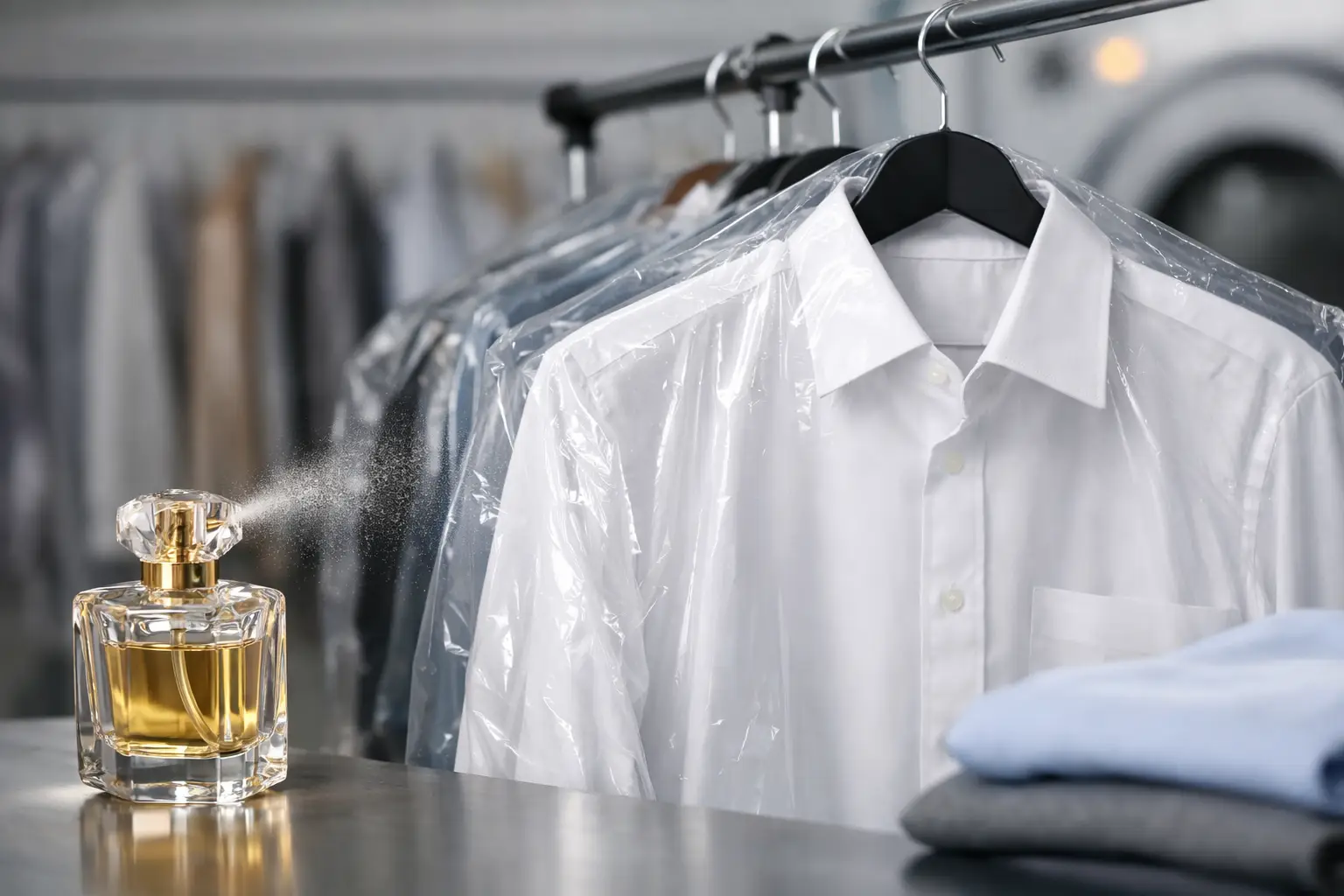
Perfume can linger long after the occasion is over. A suit worn at a wedding, an abaya stored beside fragranced garments, or a silk blouse sprayed too generously can hold onto scent in a way that regular airing out simply does not fix.
If you have been wondering whether dry cleaning can remove perfume smells, the short answer is yes, often, but not always in a single step.
The real answer depends on the fabric, the type of fragrance, how deeply it has settled into the fibers, and whether the garment has already been exposed to home remedies that can set the odor further. For delicate, structured, or luxury garments, perfume odor removal is less about masking the smell and more about using the right professional process without compromising the fabric.
Can Dry Cleaning Remove Perfume Smells From Clothes?
In many cases, dry cleaning can remove perfume smells effectively because it does more than rinse the surface. Professional dry cleaning is designed to dissolve oils, residues, and odor-causing compounds that water alone may not fully lift.
Since many perfumes are oil-based, they tend to cling to fibers, especially on wool, silk, lined garments, and formalwear.
That said, not every perfume smell behaves the same way. A light fragrance worn once on a blazer is very different from repeated perfume application on the collar of a dress or a scarf stored in a heavily scented closet.
Some fragrances contain stronger fixatives and musks that bind more stubbornly to fabric. In those situations, odor removal may require a combination of stain assessment, pre-treatment, cleaning, and controlled finishing.
This is where professional handling matters. Premium garment care is not just about putting clothing through a machine. It involves fabric identification, choosing the correct cleaning method, and checking the garment after treatment to make sure the scent has truly lifted rather than merely softened.
Why Perfume Smells Stay in Fabric
Perfume is formulated to last. That is exactly why it can become difficult to remove from clothing.
Fragrance Oils Penetrate Fabric Fibers
Fragrance oils settle into the weave of the fabric, and heat from the body can push those compounds deeper into collars, cuffs, linings, and underarm areas.
Natural fibers like wool, cashmere, and silk can hold scent particularly well because of their structure.
Storage Conditions Can Intensify Odors
If a garment is placed back in a wardrobe before it has aired properly, or if it sits near incense, room sprays, or other perfumed items, the odor can intensify.
Moisture and humidity can make the problem worse by causing fibers to trap smells more tightly.
Home Washing Is Not Always Enough
Standard detergent may clean visible soil, but perfume residue can remain behind, especially if the garment is not safe for a full wash cycle or if it has lining, embellishments, or shape-sensitive construction.
When Dry Cleaning Works Best
Dry cleaning is usually the strongest option for tailored clothing and delicate pieces that should not be immersed in water.
Ideal Garments for Dry Cleaning
- Suits
- Blazers
- Structured dresses
- Eveningwear
- Wool coats
- Luxury abayas
- Mixed-material garments
These pieces often absorb fragrance but also require careful treatment to preserve drape, finish, and fit.
Removing Combined Odors and Oils
Dry cleaning also works well when perfume odor is paired with body oils.
That combination is common around necklines and sleeves and is often the reason the smell lingers. A professional process can target both the oil residue and the scent attached to it.
For premium wardrobes, the advantage is not only odor removal. It is fabric-safe care that protects texture, color, trims, and garment construction.
When Perfume Smells May Need More Than One Treatment
Some garments require patience.
Long-Term Perfume Exposure
If perfume has been sprayed directly onto fabric over a long period, or if the item has been stored with strong fragrance exposure for months, one cleaning cycle may improve the smell without removing it completely.
Multiple Odors in One Garment
Sometimes perfume combines with deodorant, smoke, cooking smells, or storage odors. In these situations, there are multiple layers of residue that need professional attention.
Balancing Odor Removal and Fabric Safety
Aggressive odor-removal methods can damage delicate fibers if they are not matched to the garment.
For luxury care, the goal is always balanced treatment: removing as much odor as possible while avoiding shine, fading, distortion, or fiber stress.
Can Dry Cleaning Remove Perfume Smells From Delicate Fabrics?
Yes, often more safely than home washing.
Why Professional Care Matters
Silk, wool, embellished fabrics, formalwear, and premium abayas can react poorly to water, friction, or household stain products.
What starts as an attempt to remove a smell can quickly become a texture problem, watermark, or color-loss issue.
Fabric-Specific Treatment
Professional cleaners inspect:
- Linings
- Beads
- Pleats
- Embroidery
- Interfacing
- Decorative trims
This helps ensure the correct treatment is chosen before cleaning begins.
At a premium service standard, odor treatment should never be separated from garment preservation.
What Not to Do at Home
Many DIY solutions can make perfume odors harder to remove.
Avoid Adding More Fragrance
Spraying additional perfume or fabric fresheners may simply layer scents together rather than eliminate the original odor.
Avoid Harsh Home Remedies
Vinegar, baking soda pastes, and stain sprays can leave residue, create spotting, or interfere with later professional cleaning.
Avoid Excessive Heat
Steamers, hot dryers, and warm storage spaces can push fragrance compounds deeper into the fabric.
Even if the garment smells better temporarily, the scent may return once the material warms up during wear.
How Professional Cleaners Remove Perfume Odors
Effective odor removal starts with inspection.
Step 1: Fabric Assessment
The cleaner evaluates:
- Fabric type
- Garment construction
- Odor concentration
- Visible staining
- Previous treatment attempts
Step 2: Targeted Pre-Treatment
High-contact areas such as collars, sleeves, and scarf folds may receive specialized pre-treatment before cleaning begins.
Step 3: Fabric-Safe Cleaning
The cleaning process is selected according to what the garment can safely tolerate.
Step 4: Quality Control and Finishing
After cleaning, the garment is checked again before pressing, finishing, and packaging.
This ensures the odor has been properly addressed rather than simply masked.
How to Improve Results Before Sending Clothes for Cleaning
A few simple steps can improve odor-removal success.
Do Not Apply Additional Products
Avoid spraying perfumes, fresheners, or stain treatments onto the garment.
Store the Item Separately
Keep the garment away from heavily scented clothing and household fragrances.
Air It Out Properly
Allow the item to air in a cool, dry location before pickup if possible.
Inform the Cleaner
Mention the odor problem when booking the service.
If the smell is concentrated in specific areas such as collars or sleeves, provide that information as well.
Final Thoughts
Perfume should leave an impression, not a permanent trace.
When fragrance remains trapped in clothing, professional dry cleaning is often the safest and most effective solution. The right process can remove stubborn odors while protecting the texture, shape, color, and overall quality of the garment.
For delicate fabrics, luxury clothing, and valuable wardrobe pieces, professional garment care offers the best balance between odor removal and fabric preservation, helping your clothing return fresh, clean, and ready to wear.