
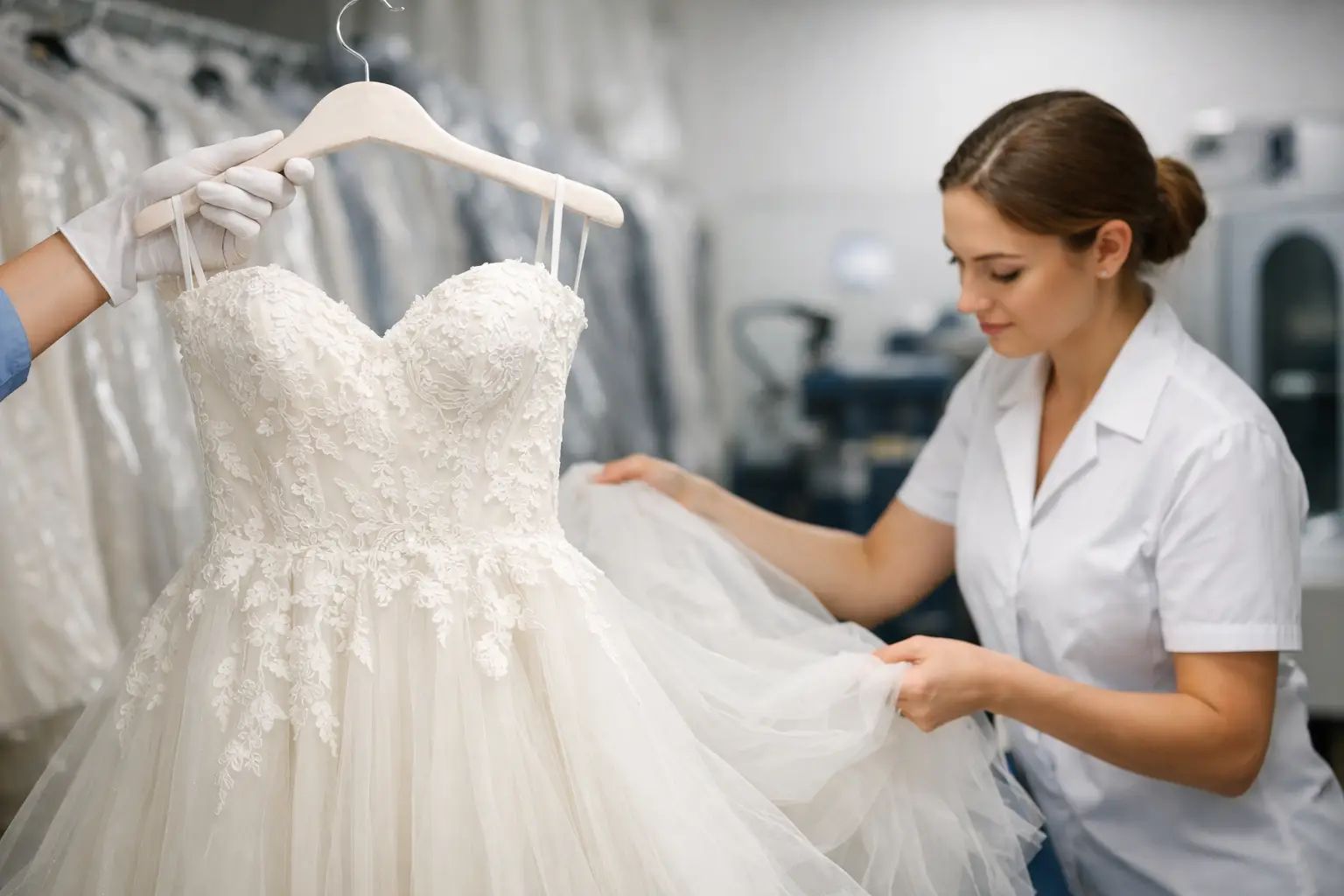
A wedding gown carries much more than visible stains. It often holds body oils around the neckline, dust and dirt along the hem, makeup near the bodice, and invisible residue from perfume, food, drinks, or outdoor photography sessions. That is why wedding dress dry cleaning is far more specialized than ordinary garment cleaning. It requires expert handling, fabric knowledge, and careful stain treatment to preserve one of the most important garments you will ever wear.
Many brides wonder when their gown should be cleaned. Some prefer immediate cleaning after the wedding, while others wait until after a honeymoon, bridal photoshoot, or second celebration. In most situations, sooner is better. Fresh stains are easier to remove, and invisible residues such as sugar, oils, and perspiration can oxidize over time, causing yellowing that becomes harder to treat later.
Why Wedding Dress Dry Cleaning Requires Specialized Care
Wedding gowns are rarely made from a single fabric. Most dresses combine materials such as satin, lace, chiffon, tulle, organza, embroidery, beads, sequins, linings, and structured support elements. Each of these components reacts differently to cleaning methods, moisture levels, heat, and solvents.
Professional wedding dress dry cleaning begins with a detailed inspection. Every section of the gown should be evaluated individually to identify stains, delicate embellishments, color sensitivity, and structural elements. This assessment helps determine the safest cleaning approach while reducing the risk of damage.
A bridal gown should return not only clean but beautifully presented. Proper finishing, reshaping, and pressing are just as important as the cleaning itself. Excessive steam or aggressive pressing can flatten delicate textures, loosen embellishments, or distort carefully designed silhouettes.
Common Stains Found on Wedding Dresses
Most wedding dresses arrive with multiple types of stains rather than a single obvious mark.
The hemline often collects:
- Dust and dirt
- Grass stains
- Sand and outdoor debris
- Street residue
The bodice and upper areas may contain:
- Makeup stains
- Foundation and setting spray residue
- Perfume marks
- Body oils and perspiration
Food and beverage spills are also common. Some stains remain invisible immediately after the event but become visible weeks or months later as they oxidize.
Different stains require different treatment techniques. Oil-based stains, beverage stains, and protein-based stains all respond differently to cleaning solutions. When lace, embroidery, or beadwork covers the affected area, stain removal becomes even more delicate.
When Should You Clean Your Wedding Dress?
The best time to clean a wedding dress is as soon as possible after the wedding. Prompt cleaning increases the chances of completely removing both visible and hidden stains before they become permanent.
While waiting a few days is generally acceptable, waiting several months can allow stains to set and fabrics to discolor. Areas most vulnerable to long-term damage include:
- Necklines
- Underarms
- Hemlines
- Closures and buttons
Some brides plan additional uses for their gown, such as post-wedding photography sessions or cultural celebrations. Even in those situations, the dress should be stored properly and inspected before long-term storage.
If the gown has noticeable staining, heavy dirt, or minor damage, early professional attention can prevent more serious restoration challenges later.
What a Quality Wedding Dress Cleaning Process Should Include
Premium wedding dress dry cleaning starts with a thorough inspection.
The process should include:
Detailed Fabric Assessment
Every gown should be examined for:
- Fabric type
- Color stability
- Embellishment security
- Construction details
- Existing damage
Professional Stain Treatment
Different areas of the dress often require different cleaning methods. The hem, lining, bodice, and decorative sections may each receive specialized treatment based on their specific needs.
Fabric-Safe Cleaning
A professional cleaner will match the cleaning method to the gown instead of forcing the gown into a standard cleaning cycle. This tailored approach helps preserve texture, color, and overall garment structure.
Finishing and Quality Control
After cleaning, the gown should be carefully reshaped, lightly pressed where appropriate, and inspected for any remaining issues. Bridal garments require a higher level of quality control because presentation is just as important as cleanliness.
Wedding Dress Dry Cleaning vs. At-Home Cleaning
Attempting to clean a wedding dress at home can be risky. Bridal fabrics are often more delicate than they appear, and household stain removers can cause permanent damage.
Common risks include:
- Water spotting
- Color bleeding
- Fabric distortion
- Damage to lace and embellishments
- Stain spreading
Even home steaming should be approached with caution. Excessive heat can affect delicate mesh, lace, adhesives, and decorative details.
While light steaming before a ceremony may be acceptable, a gown worn throughout an entire wedding day deserves professional care.
How to Choose the Right Wedding Dress Cleaner
Not every dry cleaner specializes in bridal gowns. When choosing a provider, look for a company that can clearly explain its inspection, cleaning, and finishing process.
Important qualities include:
- Experience with wedding gowns
- Fabric-safe cleaning methods
- Specialized stain treatment
- Certified equipment
- Strong quality control procedures
A professional cleaner should focus on preserving the beauty and integrity of the gown rather than simply removing stains.
For brides who value both convenience and quality, Wet & Dry Laundry provides premium garment care with professional pickup and delivery services throughout Riyadh.
Why Storage After Cleaning Matters
Even a perfectly cleaned wedding gown can deteriorate if stored incorrectly.
For long-term preservation:
- Avoid storing the dress in plastic bags
- Keep the gown in a cool, dry location
- Protect it from direct sunlight
- Avoid humid environments such as garages and attics
Proper storage helps preserve fabric quality, color, and structure for years to come.
For heavily embellished gowns or dresses with long trains, professional guidance on folding and storage can help reduce stress on seams and decorative elements.
Why Choose Wet & Dry Laundry?
At Wet & Dry Laundry, we understand that a wedding dress is more than a garment. It represents memories, emotions, and one of the most important moments of your life.
Our professional wedding dress dry cleaning service is designed to protect delicate fabrics, lace, embroidery, beadwork, and intricate details while safely removing stains and preserving the beauty of your gown.
We combine careful inspection, fabric-safe cleaning methods, expert finishing, and strict quality control to ensure every wedding dress receives the attention it deserves.
Our convenient pickup and delivery service across Riyadh makes caring for your bridal gown simple, professional, and stress-free.
Explore Our Services:
• Wedding Dress Dry Cleaning
• Dry Cleaning Services
• Abaya Cleaning
• Curtain Cleaning
• Blanket Cleaning
• Laundry & Ironing Services
• Free Pickup & Delivery in Riyadh
Final Thoughts
Wedding dress dry cleaning is about much more than removing stains. It protects delicate fabrics, preserves craftsmanship, and helps ensure your gown remains beautiful long after the celebration ends.
Whether you plan to preserve your dress for years, travel with it, or pass it on in the future, professional care provides the protection and confidence that such a special garment deserves.